



The technique of Vipassana is a simple, practical way to achieve real peace of mind and to lead a happy, useful life. Vipassana means "to see things as they really are". It is a logical process of mental purification
...
through self-observation.
From time to time, we all experience agitation, frustration and disharmony. When we suffer, we do not keep our misery limited to ourselves; instead, we keep distributing it to others. Certainly this is not a proper way to live. We all want to live at peace within ourselves, and with those around us. After all, human beings are social beings: we have to live and interact with others. How, then, can we live peacefully? How can we remain harmonious ourselves, and maintain peace and harmony around us?
Vipassana enables us to experience peace and harmony: it purifies the mind, freeing
it from suffering and the deep-seated causes of suffering. The practice leads step-by-step
to the highest spiritual goal of full liberation from all mental defilements.
To learn Vipassana it is necessary to take a ten-day residential course under the
guidance of a qualified teacher. The courses are conducted at established Vipassana
Centres and
...
other places.For the duration of the retreat, students remain within
the course site, having no contact with the outside world. They refrain from reading
and writing, and suspend any religious practices or other disciplines. They follow
a demanding daily schedule which includes about ten hours of sitting meditation.
They also observe silence, not communicating with fellow students; however, they
are free to discuss meditation questions with the teacher and material problems
with the management.
There are three steps to the training. First, the students practice abstinence from
actions which cause harm. They undertake five moral precepts, practicing abstention
from killing, stealing, lying, sexual misconduct and the use of intoxicants. The
observation of these precepts allows the mind to calm down sufficiently to proceed
with the task at hand. Second, for the first three-and-a-half days, students practice
Anapana meditation, focusing attention on the breath. This practice helps to develop
control over the unruly mind.
These first two steps of living a wholesome life and developing control of the mind
are necessary and beneficial, but are incomplete unless the third step is taken:
purifying the mind of underlying negativities. The third step, undertaken for the
last six-and-a-half days, is the practice of Vipassana: one penetrates one’s entire
physical and mental structure with the clarity of insight.
Students receive systematic meditation instructions several times a day, and each
day’s progress is explained during a taped evening discourse by S.N. Goenka. Complete
silence is observed for the first nine days. On the tenth day, students resume speaking,
making the transition back to a more extroverted way of life. The course concludes
on the morning of the eleventh day. The retreat closes with the practice of metta-bhavana
(loving-kindness or good will towards all), a meditation technique in which the
purity developed during the course is shared with all beings.
Vipassana is one of India’s most ancient meditation techniques. It was rediscovered
2500 years ago by Gotama the Buddha, and is the essence of what he practiced and
taught during his forty-five year ministry. During the Buddha’s time,
...
large numbers of people in northern India were freed from the bonds of suffering by practising
Vipassana, allowing them to attain high levels of achievement in all spheres of
life. Over time, the technique spread to the neighbouring countries of Myanmar (Burma),
Sri Lanka, Thailand and others, where it had the same ennobling effect.
Five centuries after the Buddha, the noble heritage of Vipassana had disappeared
from India. The purity of the teaching was lost elsewhere as well. In the country
of Myanmar, however, it was preserved by a chain of devoted teachers. From generation
to generation, over two thousand years, this dedicated lineage transmitted the technique
in its pristine purity.
In our time, Vipassana has been reintroduced to India, as well as to citizens from
more than eighty other countries, by S.N. Goenka. He was authorized to teach Vipassana
by the renowned Burmese Vipassana teacher, Sayagyi U Ba Khin. Before he died in
1971, Sayagyi was able to see one of his most cherished dreams realized. He had
the strong wish that Vipassana should return to India, the land of its origin, to
help it come out of its manifold problems. From India, he felt sure it would then
spread throughout the world for the benefit of all mankind.


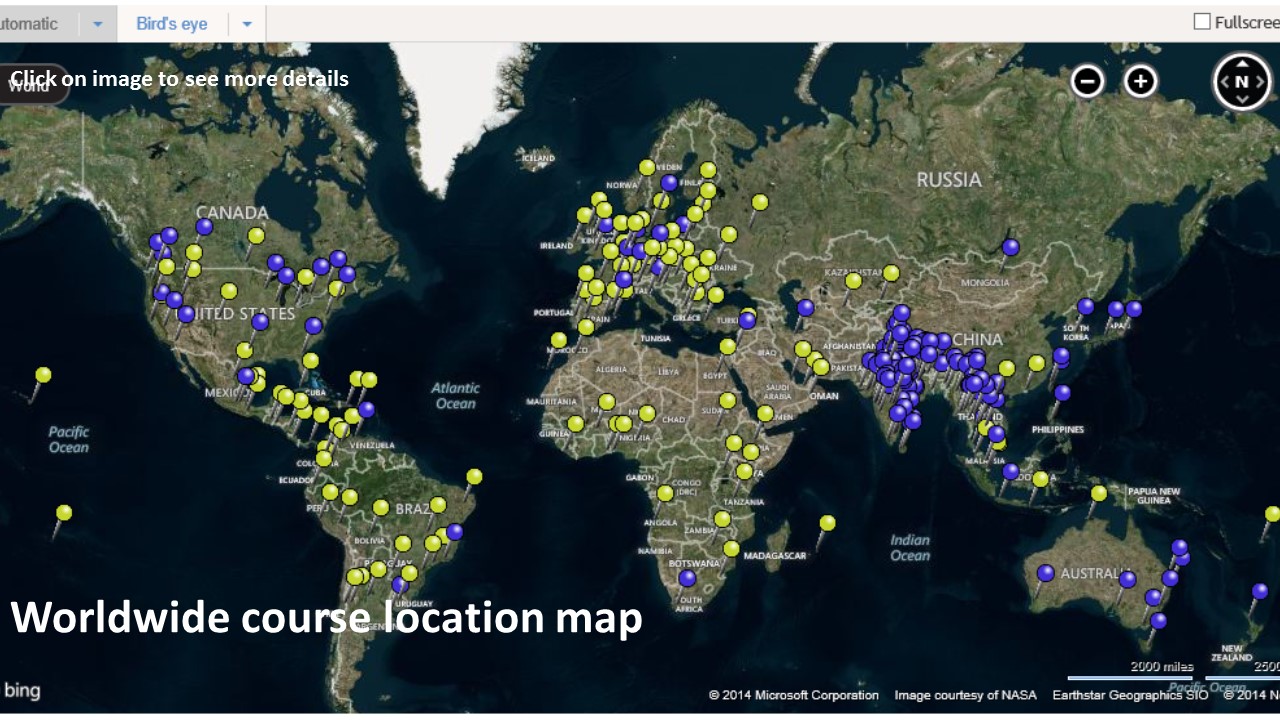
S.N. Goenka began conducting Vipassana courses in India in 1969; after ten years,
he began to teach in foreign countries as well. In the thirty-five years since he
started teaching, S.N. Goenka has conducted many ten-day Vipassana courses, and
trained over 800 assistant teachers who have conducted many courses worldwide. In
addition, many Centres have been established in India for the exclusive practice
of Vipassana. Centres for exclusive practice have been established across the world
as well. The invaluable gem of Vipassana, long preserved in the small country of
Myanmar, can now be practiced in many places throughout the world. Today ever-increasing
numbers of people have the opportunity to learn this art of living which brings
lasting peace and happiness.
In the past, India had the distinction of being regarded as a World Teacher. In
our time, the Ganges of Truth is once again flowing out from India to a thirsty
world.

 Children Course age group 9 to 16 years, third Sunday of every month
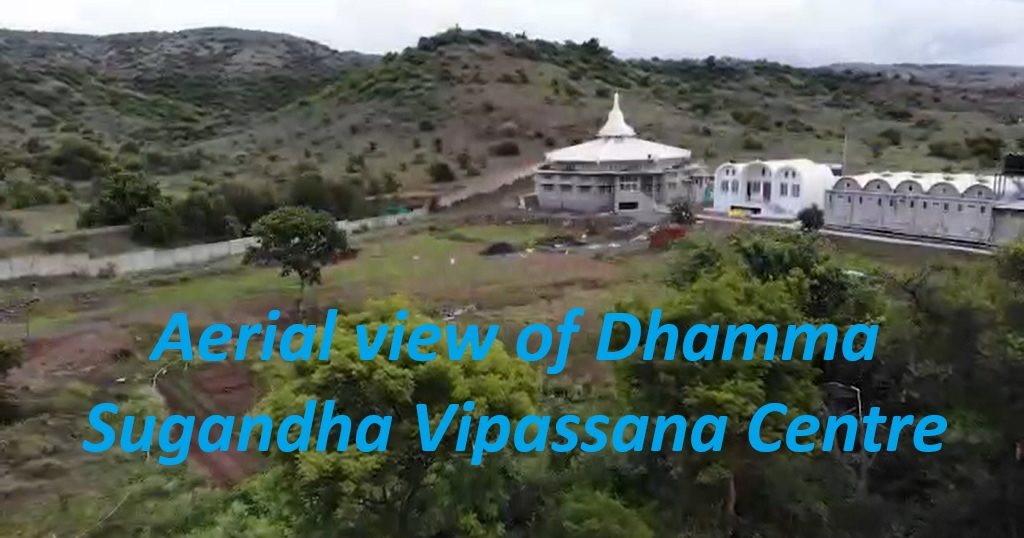
Center Address :
Sangli Vipassana Meditation Centre,
‘Dhamma Sugandha’ Gat No. 564, 5 No. Talaav Road,
Near Yallama Temple, Khamkarwadi, A/p. Bhose, Tal. Miraj,
Dist. Sangli - 416420 [Maharashtra]
Mob. 9222161236, 7385707771, 7249711008
Office Mailing Address :
Sangli Vipassana Meditation Centre,
C/o. Chougule-Patil Consultants Pvt. Ltd.,
Studio 8-8-8, Local Board Colony,
Behind Tata Petrol Pump, Miraj Road, Sangli - 416416


